Showing posts with label faith. Show all posts

Tuesday, December 12, 2017

Son of a preacher, man.


I'd been single for about ten years in 2012, and after the Internet dating bubble burst, I went back to good ole' fashioned, face-to-face contact with the same limited results. Based on the sound reasoning that I'd made a female friend of sorts at an alumni function quickly after my return from out west, I invited a Korean friend (also somewhat lukewarm) from my dojo to an alumni function downtown that served as an equidistant meeting point between our respective subway commutes from Brooklyn and Queens.

My fair-weather friend agreed to the get-together, which was somewhat surprising to me after she rebuffed other fun invitations, but summer in the city makes even the most winter-shocked South Korean eager to be outside. The theme was a disco dance party, which made my older friend happy at the prospect of enjoying. Something was in the air that night, because soon after she showed up, we started doing shots, and then time seemed to speed up. The music got louder, the bar got more crowded, and after an older man hit on me early on, the younger office guys started showing up from their pre-game bar hops further uptown that led them to our downtown soiree.

It got blurry after that, but I remember a spinning disco ball with lots of flashing lights, and dancing in a group with a cute, dark-haired guy. We took breaks from the dance floor to talk to him on the sidewalk outside, and then we were too drunk to go on. I didn't remember getting home that night, which scared my middle-aged self a lot more than the younger version of me. The city was rapidly changing with this latest wave of gentrification, and a lot of the newcomers didn't know the rules, which made it even more dangerous than it'd been before, in direct proportion to their out-of-towner paranoia. You could see the tension in their eyes walking around.

It must have scared off my friend, too, because other summer alumni party invites got turned down right away with no hesitation. We even emailed each other over the contacts we made that night, with both of us given the same info for the guy we'd been dancing with. She declined the idea of dating him while we were at the beach in Coney Island, silenced by my bodysurfing in the same way a Filipino friend from another dojo would be during my first, successful bodyboarding attempt using his board. He also never accepted an invite from me again, and they'd both been afraid of the murky Atlantic Ocean.

So, my new alumni friend and I struck up an easy correspondence at the same time I'd met another younger guy at a second alumni party that summer. Ryan was in his 20s, though, so we didn't get as far as my other paramour in his 30s did, but I was working a freelance gig midtown that made lunch dates and after-work excursions easy to arrange. He was good company, too, of a sort that I'd been accustomed to for a long time: an intelligent, educated Nuyorican making good after leaving the 'hood. I was proud to see other hardcore city kids get through "The Ivy League" system a lot easier than I did. 

That didn't make life problem-free, though, on account of us being natives. The manager at his landscape design firm was a real bitch who kept hitting on him, years before this recent spate of sexual harassment suits y'all are thriving in began. Every time she knew he was heading out the door, she'd drop work on his desk due immediately, like she'd done for our lunch date he was late for, and now this dinner date he thought she was weirdly trying to sabotage. 

She was a much older, extremely aggressive, non-native blond lady having fun jerking the chain of a young brother on the rise, in a classic RISD "pas-de-deux" of sexual tension marred by intense career competition. Poor kid couldn't tell if he was attracted by all the attention or if he was afraid for his life, when I asked him about it over pre-dinner drinks, which worried me even more. She was a seasoned cougar accustomed to muddying the work-waters with her shirts unbuttoned just the right amount, so that whenever she leaned over his desk, she showed her thickly tanned "creasage" to the newest kid on the block, confused and stressed out as he was by making it to "The Big League" firms of Manhattan.

Based on that disclosure alone, plus the rapturous detail he supplied to me about the technical qualities of the soil in the street planters we passed as we headed toward our destination, I knew he was "hands-off" dating material for me, but I liked the warmth of a humid summer night on the water. We were going to see a Muay Thai fight at the Hudson River piers later on, so even if our dinner date didn't go as planned, I'd still see some action that night. We were finally seated in a really loud restaurant that seemed to immediately perk him up with its Hispanic-flavored appetizers. We got more drinks and with our entrees, I leaned in to ask him some serious questions, as the Mojitos started to give me a fuzzy "halo effect" I could see reflected on his now more-amorous face.

Alright. Let's get down to it: food, family, faith....all the really good stuff. Here, he faltered a bit as the evenings' sheen wore away, like I suspected. Just talking about his hardened single mom from Puerto Rico brought about a dampening effect, as we dived down into the reality of our respective situations. I'd come from a broken family that did time in the projects coming up, too. I knew that without a very solid foundation, and if our careers suddenly "went south", we didn't have anything or anyone to rely on besides the stuff that got us to this point in time, and I needed him to feel that pressure a little bit, because I was way past the age of random hook-ups. He started responding to it, opening up beyond the bland office demeanor we used to pass through midtown offices, but I could see his confidence was fading.

By the time we got around to religion, he was almost done talking to me. I spoke haltingly about my traditional Catholic upbringing, and I could tell from the chill falling over him that "The Ivory Tower" we attended was still unreceptive to people of faith. Oh, well. I stopped talking so I could listen to him describe his mothers' descent into the extremes of Evangelical Christianity brought on by the stress of single motherhood, including demonic possession and public displays in the churchs' aisles while writhing on the ground speaking in tongues. Huh. I did not have that kind of upbringing. Candles, yes. Stained glass, yes. Beauty and discipline, si. This shit you sayin' to me? Uh, hell, no.

I truly did not know what to say back to him. He told me as his mom worked her way up the small, storefront church hierarchy, she'd egged him on to make up phony scenarios that would promote them even higher within the parish, by babbling gibberish and making a false conversion. "I lied about it", as he laughed uncomfortably in the face of my genuine experience. Yeah, I hesitated, but your moms...."Oh, I know!" He said it too loud and too quick, which meant he wasn't over anything. "She's totally nuts!" Right, but, that doesn't mean your spiritual life is over, I gently advised him. You're Hispanic. Catholics can always come home. And I meant it. He was my Brother-in-Christ. He was more insistent on putting all religions in the same category as UFOs and Bigfoot sightings. This brush-up with sincerity? He disliked that even more. It had happened to me more than once at RISD, so I knew the deal: the door was officially closing.

When he saw the stage version of my real-life warrior act down at the pier, I knew we'd reached the end of our destination. Now it was his turn to be silent over post-fight beers at a makeshift cabana by the water. "So, that's what you trained in, huh?" Yeah, my man. As the sun set over the river on a romance that was never-to-be, he suddenly seemed to want the evening to go on, with another round of beers and a renewed sense of energy, in pursuit of a feeling that left quickly with so many fighter men milling around the bar, dressed in tight t-shirts emblazoned on the back with a trendy design motif: two big, graphic angel wings with the feathers articulated in a highly realistic, line-art style. And just like that, it was time for us both to go home. Alone.


Happy Feast Day to Our Most Blessed Mother, The Holy Virgin, 
Our Lady of Guadalupe. Forever She Reigns as Queen of Heaven.


Thursday, September 8, 2016

Joie de Vivre


Like Wadsworth's "Evangeline" and her happy Acadian family with the beautiful black eyes living in a fertile river valley, my joy at being alive is something I can't always hide, even when it is more convenient to the people around me (or more appropriate to their customs) for me to do so. In Asian cultures, a big toothy smile is often seen as the prelude to a false act, like an overly solicitous shopkeeper trying to sell you damaged goods, or the villain dressed in black from a martial arts movie with one hand behind his back, waiting to press the button down on a bomb detonator. "Oh! Haha! You die! You die, now! Hahaha!"

Let me assure you, laughter and smiling in my culture is a sign of happiness, not deeply repressed anger or hostility. If being psycho makes you happy, you need to see a reputable doctor. Like, now. At the office it was even weirder, attracting notice wherever I went, with whomever the audience, as thinly-veiled digs that were supposed to function like so many pins popping so many balloons of mine, like the child I haven't been for quite some time. I guess when you grow up without a wailing wall at your disposable, problems are much less interesting as a showpiece for attention.

We grew up with sayings like "misery loves company" and "keep a stiff upper lip", followed by my dad's favorite "the sun comes up tomorrow" as a rip-off from the popular Broadway play "Annie". It is culturally entrenched among my people to handle problems by solving them through hard work, not worrying over them like a hangnail by "pouring salt on an open wound". There is a time to grieve, and there is a time to live, and we get to savor the richness of life through our emotions and feelings. No one is excluded from it.

Most evenings, I enjoy watching the updated version of the popular game show "Family Feud", most particularly for its inclusive representation of American families, encouraged and culled as they are by the staff of the show and their host, actor/comedian Steve Harvey. It's a lot more real than so-much genteel hand-kissing and flirting, much as I loved Rich Dawson's campy turns about the stage in the 70s and 80s. For the family that makes it to the speed round at the end of the show comes a quick sucession of answers to really hard questions, like last night's repeat episode.

The question was: on a scale of one-to-ten, how happy are you at being alive? The attractive African-American woman answered "TEN!" right away, at the same time as me. After her turn, another nicely-dressed family member came out to answer the same questions, with the extra burden of answering again if she repeated the first contestant's answers. It's a telling way to hear how families have the same mindset through their similiar answers made under the gun. Same question: how happy? And again, same lightning quick response: "TEN!"

Uh uh. Try again. "NINE!" Next best thing, right? And like that <snap!>, I felt less alone in the world, as a part of an "oppressed" people supposedly so drug down through the mud that we can't get clean. Right? Wrong! Wrong answer. I felt like we was all in the same room togetha, and we could be! That's the magic of inclusiveness, and faith, and family. You can't burn your way through it. Suddenly, I knew there were other people in the world like me, and do you know how I felt? Yup. Happy. That's the "joie de vivre" that marks our particular flavor, and you're welcome to it. That's being Acadian, y'all.


Friday, September 2, 2016

SETI


https://en.m.wikipedia.org/wiki/Search_for_extraterrestrial_intelligence#


Just like my physics professor predicted, a lot of students quit his class after a brief introduction to the upcoming semester's coursework, an experience that was duplicated for me at RISD, too, without the intentional bait-and-switch routine necessary for a savvier New York student body that uses English as a first language. I had signed up for a class I thought was "Science Fiction Illustration" that was a catalog misprint of the actual class called "Scientific Illustration". A bunch of us (mostly guys) groaned, got up from the studio tables, and immediately asked for a signature to drop the class. 

The teacher was not pleased; profs lived and died at schools based on class attendance and their lectures, and as much as I liked botanical art, I really didn't need a class in it. I had a mom for a botanist. I grew up drawing plants, trees, and flowers in vast pictorial landscapes. This was no place for me to draw the big beautiful trees of my native Hudson River valley. I could do that at home, on my own. She gave me a nasty look as I opted out of her class, a feeling I felt she might have carried over into the next class of hers that I took, which is every high-achieving student's greatest fear: retaliation and blacklisting based on their agenda as a working artist and not mine as a paid-in-full student.

Both of those fears came to fruition, and by the time I had sussed out the art school game, neither retaliatory actions counted against my post-graduation successes. In fact, that particular prof asked for one of my pieces I had made based on organic forms for the RISD Museum's permanent student collection, which bolstered me enough to tolerate her scathing criticisms of any work of mine that she found derivative, which was accurate for me. I can achieve stunning originality, but with an entire course load devoted solely to labor-intensive studio-work, occasionally I had to phone in a piece between my three part-time jobs.

Our physics professor knew better flagging spirits and intellectual tiredness. He looked haunted by his experience and subsequent failures at the famed S.E.T.I. project that proposed highly intelligent beings would respond to something as trite as a radio signal blasted into space. So what? I'm not channeling anything or anyone alien to earth right now as I sit writing to this to you while listening to my playlist (Dizzy Gillespie's live version of "Swing Low" set in Paris). It was kind of a dubious quest to begin with, and I think that's what did it in for him: the absence of faith in his original artificial construct. 

But, he should have quickly recovered. After all, that's what science and experimentation is about: a series of failures that eliminate choices through an inquiry process, leading you to the correct solution that will hold up under scrutiny for its tried-and-true testing. After a class that found me and my boys sitting closer to him in the classroom, we decided to pull back to the higher seats in the lecture hall. Something about his haggard expression and deep-set undereye bags disturbed us up close, like it was unnatural. You have to be pretty bad off to screw up star-filled nights shining brightly in the crisp, clear, cold mountain air we lived in, as a place very close to nature.

He seemed to be pleading at us, as students sitting in the second row of the classroom, with his foot propped up on a pull-down seat's armrest, looking down at us like we didn't know what was up. "I mean, there's nothing out there!" He said to us, in exasperation. "NOTHING!" He acted blown away by it, like a space alien or lifeform that can traverse time and space through wormholes would give a fuck about his petty ego problems, which is what my man DutchBoy basically said to him. "Yeah, but didn't you know that when you set up the experiment? That it could fail? I mean, science isn't about foregone conclusions." Right! Like, adapt and problem-solve, dude. Let's build a spaceship instead! It should've closed down one avenue for him to explore another, but he was stuck on it as a theory, which is a bad place for any scientist (or student) to be. Time to move on, bro. 

It revealed to me just how limiting my education could be at Oneonta, which helped motivate me to undergo one of the hardest experiences of my life that is the Rhode Island School of Design's admittance process. If I remained on "Easy Street", I risked limiting myself to the intellectual capabilities of someone who mistakenly thought that the key to enlightenment with an eternal deity was to simply blast his BabyBoomer songs into the galaxy like some kind of intergalactic space jam. Someone tapped the "red hair bud" going around campus too hard this winter, bro. Word. And like that, I was ready to tackle the bigger questions of the universe, like: how do I get my snow dog with lots of fur into a spacesuit and decompression stasis chamber? Still need help on that one, NASA. Any day now, right?

Thursday, September 1, 2016

Psychic Friends Network


https://en.m.wikipedia.org/wiki/Psychic# 

Certain generations develop a type of "groupthink" that transcends their immediate presence, to become indicative of a much deeper action taking place than that which it would openly appear to be. Because me and my classmates were forced into extraordinarily difficult life situations coupled with extreme stress, we had to communicate without exposing it to the very people supposed to protect us, our parents, who would retaliate any action they could perceive or stump as a threat while in their delusional states. I know it's as intense as it reads.

I have never (NEVER) met a GenX'er who was not physically, emotionally, mentally, and sometimes sexually, abused to the extreme. Under our parents bigger and often stronger hands, we had to make quick life-changing decisions "on the fly", though it is not something we wish to replicate in any other generation. Sanity and hindsight will do that to you. It left us to contemplate just what the fuck went wrong with the sick people around us, when we had the time and space to do so, which, for me and my friends, meant our successful escape to an away college, as a time period of such happiness and fulfillment that it ever marked in severe contrast those later times when we felt just as unfulfilled as we had during our entrapped childhoods.

We had been tasked, as children and teens, to heal every serious adult woe that existed including, but not limited to: alcoholism and addiction, sexual dysfunction, homosexuality, their media-touted "mid-life crisis", adultery, divorce, joblessness and homelessness, extreme over- and under-spending, bad healthcare systems and the medicated side effects of their genetic disorders like madness and dementia combined with schizophrenia and a bevy of scientifically complex mood/identity/personality disorders with a lack of available and appropriate treatments that threatened immediate bankruptcies, foreclosures, and debt, along with not-so-handy alternatives like debtor prisons and/or incarcerations (or foster care) through corruptly inept social services and justice departments. Like, everything that the world has to offer us as severely marginalized individuals.

As a really small generation, we found that our dire circumstances necessitated an unforeseen sophistication to our brief interactions, squeezed as we were by our parent's (and/or grandparents) acute paranoia, which meant that all of our household communiques were strictly monitored for any signs of advanced thought or problem-solving abilities that would conflict with an illness that took on biblical proportions, in direct contrast to our religious ethics. We were "wrong" for simply existing in the covering chaos that evil thrives in, susceptible as our families were to it, in their sicknesses. We became adept at "reading" our emotions well with just a glance or a look, which often only increased the paranoia of the less adept around us.

Survivors of bipolar families like ours often describe in alarming detail (to them, not us) the "rock-and-a-hard-place" space that the severely mentally ill impose on the people around them, as a boxed-in corner where you can either choose death or their abuse. I'm not kidding or using an arty metaphor, either. We had death-defying car rides with stoned drunks as children trapped in their back seats, or rocky water rides down spring-filled rivers that became ego-driven contests with parents hellbent on destruction in the face of our greater gifts that were designed for service but refused through wanton pride.

It's a hard thing to prove as a child, and even harder to describe without the evidence that our families would just as wantonly destroy, in fear of prosecution or exposure. That's how entrenched their untreated sickness became. They'd rather die or kill us, or at the very least hurt us badly, than admit to any wrong-doing or making of mistakes. It was an incredibly selfish and spoiled thing to do, and I remain aghast at my parent's immaturity, as I am in awe of our relative composure in the face of their extreme carelessness. I've been told that I am extremely "lucky" to be alive, but I know it's not luck. It's me, and my extraordinary band of "freaks" that you call "superheroes" or "X-Men", if and when the mood or the money strikes you. Try living it.

Monday, July 18, 2016

The Land of "The Happy People"


https://en.wikipedia.org/wiki/Evangeline


Like my infamous composure and great passions, my happiness is deep and profound. You would think that's a blessing, until you meet the opposite of contentment in the form of a depressed psychotic who hates you for, uh, being "pretty". Yeah, that's it! All of my life, my ability to "right" myself like a boat that was in danger of capsizing has been noticed, studied from a distance, and just as often, despised. Having a healthy brain is a very difficult thing to describe to someone afflicted with many serious ailments, so as a result, I simply took on more work than humanly possible to make up for the difference in abilities present in myself that are so lacking in the people around me. 

During the first work week I had at yet another job with a workflow that was rife with incompetence, I was met with derision, nasty quips, and prolonged looks of anger thrown in my general direction, because unlike fictional movies and t.v. shows, the heroine of every drama is the often the least liked person in the room. "How are you doing all this?!", an incredulous publisher asked me in front of some douchebag production manager who was drowning in his own anger that'd been set to a slow simmer for many years. I hoisted up a company coffee cup in salute "With this," and then I deconstructed the next problem that was mine to solve for them through art, design, and production.

Genius is fun from afar, but not when you're always the only person in the room with all the answers, with real solutions that don't offer shelter to the mad and hopelessly addicted, because it exposes them overmuch in their shoddy thinking. Most people I worked for absolutely hated their jobs, but they felt that they needed money for healthcare and housing, which, in this century, is being reclassified as "Disability". Really, they didn't need money for much. These were not the kinds of people who can actually enjoy traveling, or really good music, or excellent gourmet food, because they simply do not have the type of brains to appreciate such things in life, which makes the concept of "upward mobility" a bit of a joke for them, unfortunately.

It was like the exact opposite of the old saying, except it was beer tastes on a champagne budget, and this was publishing, a supposedly "highbrow" endeavor for the wealthy WASPy trust fund set, made of those less inclined to strike Wall Street gold. And then I showed up. It was the same as anywhere else, for me. Sigh...yeah, I know. I don't fit in here. Right? Right! But, then, why are you so happy? You mean besides the brilliant and beautiful thing? Uh, not much, I guess! What to say? You work for me, even though it's not  "supposed" to be that way because of (pick one): age, sex, status, looks, etc. There was always a reason for my oppression at the hands of the less gifted.

In a fascinating twist, the most literary people on the planet never figured out "why", when it had been published to such great acclaim so long ago, so perhaps it's time for a reprint. I'm happy because it is a part of who I am, blessed to be alive on G-ds Green Earth, and the receiver of His Greatest Gifts. That's why. How's Monday working out for you, office grunts of the world? I'll bet it's just as bad as all the other weeks you've ever had, and I'm not there to blame, which is too bad. The right to pursue happiness is every American's right in this world we live in. Avail yourself of it. Live well, like we do. Bonjour, Acadies!

In the Acadian land, on the shores of the Basin of Minas,
Distant, secluded, still, the little village of Grand-PrĂ©
Lay in the fruitful valley.  Vast meadows stretched to the
eastward,
Giving the village its name, and pasture to flocks without
number.
Dikes, that the hands of the farmers had raised with labor
incessant,
Shut out the turbulent tides; but at stated seasons the
flood-gates
Opened, and welcomed the sea to wander at will o'er the meadows.
West and south there were fields of flax, and orchards and
cornfields
Spreading afar and unfenced o'er the plain; and away to the
northward
Blomidon rose, and the forests old, and aloft on the mountains
Sea-fogs pitched their tents, and mists from the mighty Atlantic
Looked on the happy valley, but ne'er from their station
Descended.
There, in the midst of its farms, reposed the Acadian village.
Strongly built were the houses, with frames of oak and of
hemlock,
Such as the peasants of Normandy built in the reign of the
Henries.
Thatched were the roofs, with dormer-windows; and gables
projecting
Over the basement below protected and shaded the doorway.
There in the tranquil evenings of summer, when brightly the
sunset
Lighted the village street, and gilded the vanes on the chimneys,
Matrons and maidens sat in snow-white caps and in kirtles
Scarlet and blue and green, with distaffs spinning the golden
Flax for the gossiping looms, whose noisy shuttles within doors
Mingled their sound with the whir of the wheels and the songs of
the maidens.
Solemnly down the street came the parish priest, and the children
Paused in their play to kiss the hand he extended to bless them.
Reverend walked he among them; and up rose matrons and maidens,
Hailing his slow approach with words of affectionate welcome.
Then came the laborers home from the field, and serenely the sun
sank
Down to his rest, and twilight prevailed.  Anon from the belfry
Softly the Angelus sounded, and over the roofs of the village
Columns of pale blue smoke, like clouds of incense ascending,
Rose from a hundred hearths, the homes of peace and contentment.
Thus dwelt together in love these simple Acadian farmers,--
Dwelt in the love of God and of man.  Alike were they free from
Fear, that reigns with the tyrant, and envy, the vice of
republics.
Neither locks had they to their doors, nor bars to their windows;
But their dwellings were open as day and the hearts of their
owners;
There the richest was poor, and the poorest lived in abundance.
Somewhat apart from the village, and nearer the Basin of Minas,
Benedict Bellefontaine, the wealthiest farmer of Grand-PrĂ©,
Dwelt on his goodly acres; and with him, directing his household,
Gentle Evangeline lived, his child, and the pride of the village.
Stalworth and stately in form was the man of seventy winters;
Hearty and hale was he, an oak that is covered with snow-flakes;
White as the snow were his locks, and his cheeks as brown as the
oak-leaves.
Fair was she to behold, that maiden of seventeen summers.
Black were her eyes as the berry that grows on the thorn by the
wayside,
Black, yet how softly they gleamed beneath the brown shade of her
tresses!
Sweet was her breath as the breath of kine that feed in the
meadows.
When in the harvest heat she bore to the reapers at noontide
Flagons of home-brewed ale, ah! fair in sooth was the maiden.
Fairer was she when, on Sunday morn, while the bell from its
turret
Sprinkled with holy sounds the air, as the priest with his hyssop
Sprinkles the congregation, and scatters blessings upon them,
Down the long street she passed, with her chaplet of beads and
her missal,
Wearing her Norman cap and her kirtle of blue, and the ear-rings,
Brought in the olden time from France, and since, as an heirloom,
Handed down from mother to child, through long generations.
But a celestial brightness--a more ethereal beauty--
Shone on her face and encircled her form, when, after confession,
Homeward serenely she walked with God's benediction upon her.
When she had passed, it seemed like the ceasing of exquisite
music.


Thursday, July 7, 2016

By Any Other Name


Arms of the House of de Burgh.svg


You probably know by now that the American immigrant experience isn't some "la-di-da" fantasy concocted solely by rich Hollywood filmmakers and gay Broadway producers. The streets weren't paved with gold when my ancestors arrived here (nor are they now) because they built this city, and dozens of others like it, too. If it was paved at all back then, it was put down in the sizzling heat that is New York's hot summer sun, made with durable Rockland County gravel (hence the name: https://en.wikipedia.org/wiki/Rockland_County,_New_York), padded with the well-trodden horse-shit from so many carriages, that fragrantly emanated from between the big paving stones in the heat.

My grandfather told me stories about "The El" (https://en.wikipedia.org/wiki/IRT_Third_Avenue_Line & (https://en.wikipedia.org/wiki/IRT_Sixth_Avenue_Line), a newly-elevated carriage service that rode high above the stink of the messy cobblestone streets that was turn-of-the-century New York City, in a pleasant riding experience that had velvet ropes for them to hang onto, while standing between the fancy crushed-velvet seats. Quite an experience for a native-born Brooklyn boy like my grandfather to have as a child, used as he was to the small family farms that still lined Brooklyn's streets back then, with double-wide avenues functioning as one big farm route that was conducive to trade between rural crop-producing Long Island and the borough of Manhattan: http://www.bklynlibrary.org/brooklyncollection/historic-brooklyn-photographs.

As great and hard as our real life experiences could be in this land of our birth, it was not always so for many other poor immigrant families, burdened as they were by a lack of education and native know-how. My ex's family was like that. Even though he had the privilege of his mother's ancient Indian lines—for precious government money, land rights, and serious tuition breaks—his father's Polish family fared less well in upstate New York, when it came to free handouts earned from the backs of our joint ancestral labors. It made them twitchy and greedy when it came to earning off of us as a people, competing in the wild marketplace that freedom brings. It makes people nervous about surviving here, you know? Winter's always coming.

Besides immigrant dreams that turned out not to be true, they also wrongly believed that the death-defying boat ride to New York during wintertime was bad, starving as they were then, with a few hastily-shoved potatoes in their dirty pockets, in between sudden squalls at sea and pulls off a bottle of homemade vodka. Uh uh, homies. It gets so much worse. Like, much much worse. My friend Linda's family were Muslims from Russia and Poland who had their name changed immediately upon arrival to Ellis Island, for the comfort of the paper-processing government workers who were basically illiterate. She knew that because her grandmother told her her own emigre story, and she told it to me, not that Linda was always truthful with me. Some families are just tricky like that, you know?

Her white Muslim grandmother married a Mongolian man before they emigrated further east, becoming "Janowski" for ease of travel through Poland and Russia, which was then changed once again to "Janow" here in America—to ease their arrival experience—and that's what my friend Dave's dad did, too, though he told it to me in the tone of a perpetually aggrieved, long-suffering people. "We had to change it, just to get work in 'the unions'. All the unions were run by the Irish back then!", he would explain to us over a dinner of kielbasa and German baked potatoes au gratin with bacon and cheddar melted on top (bless you, Ginger: you know upstate winters, mama!). And that's exactly what his grandfather, his father, and then, he did: they went from being proud, big, strong, Polish-American  "Budzanowski" Catholic boys (http://www.thetreemaker.com/family-coat-b/budzanowski/poland.html), to pseudo Irish-Americans, in a state that has one of the biggest Irish immigrant populations outside of "Eire": http://www.forbes.com/sites/trulia/2013/03/15/americas-most-irish-towns/#59703e0a495e.

Anyway, it was a common enough story among Americans in this vast wilderness that can be the American experience. Anything can happen, at any time. Birth certificates could be falsely-made, and then just as easily lost. Names were quickly taken up and easily discarded, for a variety of reasons: for work, to escape notice as a convict on the run, or to hide the "blackness" behind the real origins of your "low" birth, like a poor native girl who just took on the faith of her loving husband, as Catholics assume during the Rite of Confirmation. 

I willingly chose to take on my grandmother's American name "Ann" in the French spelling (she was baptized "Angelina") to also honor St. Anne (https://en.wikipedia.org/wiki/Saint_Anne), my patron saint of Confirmation, so as to commemorate that time period forever through divine ordination onto my name, which officially makes my name "Marie Louise Anne Doucette". I pronounced it in French for an older friend of mine here at the local library, which was totally impenetrable to him, and then I said it again in perfectly unaccented English, because it can be that dissimilar with a change in pronunciation. 

I know how tricky names can be, as well as the risks involved with naming. It can (or could) mean life or death for some of us, still. It couldn't have been easy for my former in-laws to "pass" as Irish-born back then, but I did understand the economic and cultural pressures his family felt, to conform and survive as "strangers in a strange land". Luckily, he found his squaw in high school, and it isn't like Polish/Russian-born people are exactly "new" to the deep cold of a Northern climate, just our like indigenous people. We need(ed) the change of seasons to remain healthy, because our climate does a lot of good things to our bodies, for the continued health of our tribe. 

Anyway, we found each other through the ensuing centuries of assimilation and madness, because New Yorkers know their own. 
I found—in a very small isolated town buried deep in the rough, dense, wild mountains of New York—an Indo-European American Indian kinda like me. You can't mess with a destiny like ours, love, because we have a "forever" kind of thing goin' on. Trust on that, peeps. We are forever wild. For you. Come find us! We want you in it with us, for real. Be in it, with us.


Wednesday, July 6, 2016

Contents Under Pressure


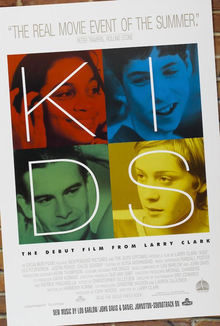
Kids film.jpg


Unlike the addicts and "headcases" lurking around us, me and my working class friends always knew we smoked, drank, and experimented to escape the daily hell(s) we came from. We always knew that if/when we ran things, it would be better, and now it is. But, that didn't help us out much as kids, except in the same dully repetitive way, which was the point behind our terrible homes: we had to do what our insane parents wanted us to, or needed and/or forced us to do, or we'd become homeless children susceptible to crazy-ass hookers and the drugged-out zombies on crack serving them up as their pimps on the then-wild streets of 70s-80s New York City.

We'd see the bombed-out buildings and wandering packs of wild dogs lope through our old neighborhoods like hounds escaped from hell (https://en.wikipedia.org/wiki/Wolfen_(film), and wherever we went, there'd be art in our wake to tell our "peeps" about the bad news, too, though in a really fun and entertaining way. That's how you have to do it with the insane, or they could "snap out" on you, in a suddenly violent way. We'd been at the bad end of a father's fist or a mother's belt borrowed from him, and what they couldn't beat out of us, they starved us into doing, by withholding money and time and parenting.

My grandparents were "hip" to the whole scene; they'd also been forced onto our mean city streets before they were ready, by sick households that just gave up, to have family that then joined together to force them out of school (where they belonged) into rotten jobs that were humiliating and demeaning to the brilliant kids with potential that they were, and remained for the rest of their lives. Their mad families made their prowess—in comparison to their ineptitude(s)—their punishment for "out-living" them. I asked them about it, in between abusive bouts in our sick households, as I leaned in over summertime glasses of excellently-made iced tea or fresh lemonade, drinking in their good health like the succulent blend they had made it for; just for me and my ears alone.

My grandmother wanted to be a nurse or a teacher, and so in response to the brutal pushing of her parents, older brothers, and older sisters (who lived in their own fantasy worlds of delusional thinking and absenteeism), our Great Lord gave them, in His Infinite Wisdom, me to teach, and I drank it in like I was ready for it. I needed it, their succoring. Lord knows I was hungry for it, banished and isolated as I was in a home full of untreated sick people that they also knew all too well from their own lives and upbringings. Well, what did you do after your brother pretended he was "trying out" for the Yankees (cough<bullshit>cough), by wasting his time playing stick-ball in the streets? I asked her, and she told me the truth. Oh, she told me, I won the decision-making process in my household, by becoming a factory manager by the time I was 19 or 20-years old. 

Yeah! That cheered me up. And she did. Through her superior ability to earn, she ruled the roost, which pulled her out of an abusive relationship that was to be her arranged marriage with a boy back from "The Old Country" in the Abruzzi region of Bari, most likely a cousin too closely related for a good healthy match anyway. He put his hands on her, and she fought back by standing up to him, which earned her her father's approval and respect. In the meantime, she met and fell in love with my French Swiss/Irish-American grandfather while canoeing, because they both loved the beach and the outdoors. Ha! Of course, you do. Me, too! But, like, why did they do what they did to you?

"Oh, I don't know..." She'd trail off, in recollection. "After refrigeration put him out of the ice business, he just stopped working." Huh? I never heard of such a thing in my extremely strict household, where child labor was considered a natural right by my sick parents, just like theirs. Why? "I don't know!" she responded to me. "I think they were scared and tired of trying to 'make it' in America. They just refused to learn English." Ah...Yeah, I knew that one, too. Just give up and cave into it. "And my brothers were favored for being older by Italians, so they got away with doing nothing all day." Ha! Yeah! Right! I have that, too! She nodded, and then continued talking to me in private, where no one else could hear her but me, and maybe my silent grandfather.

"Yes, but you have to understand something, Marie..." My ears perked up like the puppy I was, in the presence of greatness, because even I knew from my earliest years that my grandmother ran shit like the strong-armed, Bronx-born female she was. "The work that they refused to do made me much stronger than them." Uh huh. Preach it. Better than school on a Sunday. "After I took the economic lead in my household, I had 'the say' then. Not my parents. Sure, my father loved me and stood up to the neighborhood after my fiancee 'put his hands' on me, but I also had to wait almost four years before I could marry your grandfather, because they were prejudiced against Irish people", and here she made the drink symbol with her hand to her mouth, like you're tippin' back all the way in one big swallow from yo' glass.

Yeah, word. I got that. It meant I'd have to wait for what might be a very long time, even after I succeeded from all my hard work, to get what I wanted, maybe much longer than necessary, because it would take that much time for my family to catch up to my reality in any time, either the past, present, and/or future. And after that, we'd pause in our short conversations that were blessedly free from the static of the mentally ill around us—either swirling about in tense motion, or sitting around us in fretful waiting—in these short exchanges that were like breathing in fresh air after working underground all day in the explosive sewers of the city, like my grandfather did for most of his life (https://en.wikipedia.org/wiki/Consolidated_Edison). 

They'd take a long steadying pull from their cool sodas or glasses of beer, as I followed along with my baby soda or lemonade. It became a ritual that me, my friends, and our classmates would re-enact at about the same time, wherever we were, that'd bring us together in an almost magical synergy we knew it was; a deeply spiritual destiny that we were fated to meet, like the aligning of the planets under a thick blanket of stars in the crisp clear air of upstate New York, protected as we were in our hard-to-reach mountain stronghold of Oneonta, re-creating sacred rituals of renewal and refreshment as young teenage "parents" who'd been made to run things way before our time(s): "It's 'smoke 'em if you got 'em' time!" 

And then we would. We'd pull out cigarettes to take long drags from, in a steadying way that meant the next fight was near, followed by a long drink from an ice-cold beer that'd been cooled from the snow we'd just reach outside our dorm rooms or old houses to grab for our coolers. It wasn't alcoholism, or addiction, or the "touchy-feely" language of some fake pseudo-science made just  for t.v., like the bad pop psychology that's become the business of rehabilitation, rather than the cure. We wanted more for them and for you; now, then, and always. We want(ed) a cure; not for us, but for you. All of you. You get me? Yeah, I bet you do. Now you do. From me, you do.


Friday, July 1, 2016

Thug Life 4E


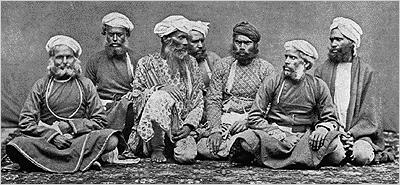
Group of Thugs.gif

Trifling 'hood rats ain't nuthin' new to me. Like I've explained to y'all  before, the first real criminals I met who tried to scam me were my very own family."Home" and "house" and "safe" were never really words that signified good places for me to live in, as my sickest family members told me every time they thought I "stepped out" of line of their controlling manipulations. Continually consistent and strongly applied coercion is the very first sign to working class kids that our parents or older siblings are gearing up for their next big push at us, in a series of highly coordinated acts that spoke of their persistent ability to attack me behind my back as a child, which solidified my "head of household" status to me over and over again, at a very young age, when I was just some po' girl chile with no one to help me out, and nowhere to go.

Except that I did. I always had my excellently faithful grandparents to back me up with their good health and superior strength, as a direct contradiction to the fearful paranoia that so deeply marks the sickest people around us. They illegally violated our privacy and sense of security every time they were caught abusing us, and that could happen at any time, with their violently frenzied periods of deep paranoia that define the day-to-day reality that is mental illness and psychoses. It became so bad, me and my brothers began threatening exposure to our school teachers and social services, with the achievement of a new family policy clearly stipulating that there would be no hits to the head, so as to prevent telling marks from clearly showing where anyone of authority could see them, not that we thought foster care was any better than what we had. We knew.

It didn't stop my mom from beating up my oldest brother into a broken arm that he covered up for her expertly at Nyack Hospital's ER back in the day, with the conveniently well-practiced excuse of "falling down the stairs" at the ready by both parties that they carefully rehearsed during the car ride over. It was easy for him to do, too, because my brother had prior sports injuries that my mom could frame into a clear sense of his proven carelessness as a wild boy child. 

Our "savage" genetics were also an easy target for her to blame us for any of her abuse that she aimed at us. We were raked over the coals by the mad people around us, to the point of our collective perfection in comparison to their obviously bad behavior, which was then thrown into our faces, too. "What are you, like, 'perfect' or something?" We learned to avoid crazy people the way a cat burglar breaks into a city apartment during the summertime, through an open window by a conveniently placed fire escape.

My self-defense makes attempts at scamming me into this absurdly surreal game of "cat-and-mouse" that I can best with both hands, arms, and legs bound tightly, with a blindfold on. And it continued throughout my life at every public venue I ever "dared" to appear at, including the very public abuse that I suffer(ed) at this public library, because it doesn't matter where I go or what I do, who I am with, and what I look like. It doesn't actually have anything to do with me at all, because I don't do anything wrong, which is a huge problem for a violently acting-out criminal sitting next to me at a public computer, or on the bus to the city, or on the subway, or at work in some office.

It became a pattern that, no matter how cleverly and craftily done, I managed to fight back against —on little food, sleep, money, clothing, medicine, support, and/or shelter—sussed out in record time, to the horrified amazement of yet another delusional individual who felt protected enough to attack me in full clear view of several authority figures in charge who had every opportunity to clear up the situation with one word in my favor. But, that's part of the job, right?

Over time, I even developed a handy "cheat sheet" formula for businesses and other public venues that preferred to witness ongoing abuse that goes unchecked without protecting me, because, you know, I'm obviously society's number one scumbag. One: hire a bitchy thick blond to "man" your reception area with an even bigger desk to match her overblown ego. Two: allow her to gossip loudly and spread rumors within clear earshot of large groups of people who will then feign a planned indifference that you will pretend to control with Three: a series of intentionally inept "scolds" done purely for publicity's sake, before telling your mistress(es) behind closed doors to keep on doing exactly what she's been doing, because, again, I'm the beautiful, high-performing single woman on an extremely tight budget that you like to squeeze as part of some con game.

She, in turn, will blow on her troll dolls in an unchecked madness that you will laugh about in an obviously evil way, because you like seeing your lead bitch with fangs rave at a woman out of your league. So, on this very special Friday, let's go over your "Special Needs" list of rules that even a kindergartner understands, just in case you plead ignorance or impairment. Ready? Okay, here we go!

Children Ten Commandments

1. Have no other gods.
2. Have no idols.
3. Honor God's name.
4. Honor the Sabbath day.
5. Honor your parents.
6. Do not murder.
7. Do not commit adultery.
8. Do not steal.
9. Do not perjure yourself.
10. Do not covet.


Got it? Good! Now, let's go over every flaw you have, in clear language that even you can understand, with your list of serious impairment(s):
Vice
Virtues
Lust Luxuria Chastity Castitas
Gluttony Gula Temperance Temperantia
Greed Avaritia Charity (or, sometimes, Generosity)† Caritas (Liberalitas)
Sloth Tristitia/Acedia Diligence Industria
Wrath Ira Patience Patientia
Envy Invidia Kindness Humanitas
Pride Superbia Humility Humilitas
†This virtue is generally considered to be the greatest and the most important of all. https://en.wikipedia.org/wiki/Seven_deadly_sins

Don't play this here New York mama for a "sucka", kids. That is all. See you next week. Be ready. It's "go" time!

Thursday, June 23, 2016

I Write the Book (Everyday)


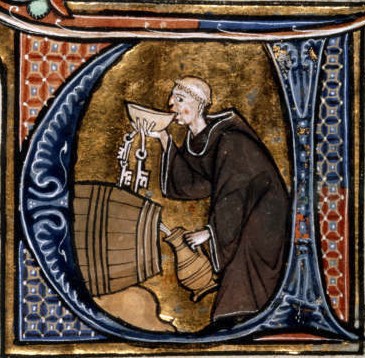
 https://en.wikipedia.org/wiki/Illuminated_manuscript

For working class people like myself, our productivity serves as the vocation that directs and guides our lives, because labor is the greatest conduit to self-determination that we have. It was a really hard concept to describe to the average Americans I met earlier in life, like the feeling behind mia famiglia*, a shared closeness that bonds New Yorkers on a deeper level than your average cul-de-sac couple, because if you don't figure out how to live on top of one another in a small tenement flat with a shared bathroom on every other floor, you're fucked for life. You might just kill someone on the next "bad" day!

Much like our advanced solutions for recycling and re-purposing, our island nation began with limited space that demanded excellent and immediate solutions. While other Americans buried their toxic trash in empty fields that they hoped would just disappear like so much dust under a carpet, we were forced to live with our garbage strewn everywhere, as the price we paid for our failure to adapt. There was simply nowhere else to go. Our limited shared spaces created some funny dynamics, like the floating garbage barge denied docking pretty much everywhere (https://en.wikipedia.org/wiki/Mobro_4000), and the infamous prison barge for our society's over-spill of convicts (https://en.wikipedia.org/wiki/Vernon_C._Bain_Correctional_Center).

When you can't take the train without a deep feeling of paranoia because the homeless drug addicts outnumber the people of the everyday working world, you've got a big problem, and when you can't walk down the street without the rank smell of a two-week pileup of garbage during the hottest season of the year (ah, August in the city...), you kinda want to solve those problems as quickly as possible. And so, we did. In the process, we became the world leader for innovation, adaptation, flexibility, and real change, because we had to. It's hard, and it's entirely human. But, on any given day, you'd find just as many working class people like me encountering the same situations with solutions already in hand (and cheaper than yours to implement, Baby Boomer) right now.

So, we waited. And waited. And then, we waited some more, for you to catch up to a reality that you check(ed) out of regularly with t.v., booze, pills, shopping, junk food, and whatever else the "idiot box" sells you, because you can't cope with the world you made
—and then destroyed. Thanks for that, by the way. I heard one of the designers from the home-based reality show "Queer Eye for the Straight Eye" (https://en.wikipedia.org/wiki/Queer_Eye) joke that he'd simply become the maid service for a bunch of dysfunctional shut-ins, and it was easy to see why. "You know your apartment needs cleaning when you have air fresheners plugged into every outlet", was the most direct way one of the designers could explain the concept of "clean" to a drooling chronic case of angst.

For me and my hard-working friends, the class system was completely different than the false realities sold to us in college and on the job through popular t.v. shows and movies. There were no more "blue collar" or "white collar" designations anymore. We were left with those who can, and those who can't, with a million problems needing solutions, and all of them were yours, not ours. In order to live, we had to solve your alcoholism and indifference for you, by managing it better than you did, with your greater share of power and money. In short, we became the ruling class from every great time in history, like the samurai warrior class of Japan, or the enslaved architectural scribes of Ancient Egypt. Because we had to. We had to work our way out of it. We simply had to. We have to work. There is no other choice.


Work for me has always held the power of self-determination, as the ability to rise above the shitty overblown titles of the inept office worker, or the ineptitude behind the egotistical fast-food restaurant manager, doomed for a life of gruelingly repetitive banality. Anything but this. That's how we felt about it. Anything must be better than this. And we were right. It was. Our lives were/are so much better than the people in our families that we grew up with back then. I always describe my group ethos as thus, for our motivation: I don't want to die. That was/is our motto. SO inspiring, right! Yeah, sure. It's a great bestseller, if you package it for demented retards. We rose above the labels and strata of the American Dream, because the fantasy was never real for us. We became the work, and in the process, we began to rule the world. Through popular vote, of course. What else is there?

People are the primary artisans of their own development, the first in charge!