Wednesday, July 13, 2016

32 Flavors


https://en.wikipedia.org/wiki/Vanilla#History

As you know from recent headlines (and some not-so-recent), public spaces have become rife "hotspots" for all sorts of crimes, like mass murder, which is also not new to human society. I've always known that people were unsafe. Just ask my family. A more vicious set of scavenging predators you're less likely to meet. We have/had: convicted murderers doing hard time, prostitutes, drug dealers, prostituting drug dealers also doing hard time, mobsters, gangsters, punks, etc. You name it, we've had it, and those were/are just the more openly active criminals from my father's side. The lazy people from my maternal line are much savvier at hiding their crimes, because "guineas" are like that. You know, mafiasos. Not my grandparents, but probably yours, paisans.

It's made my aggressive good health (not that that wasn't attacked constantly and/or mocked, like any other illnesses I might have/had, too, because it was) stand out in sharp relief to any family functions I attend(ed), or if I just wanted to use the upstairs bathroom where it was warmer before getting ready for school as a kid, with my two brothers pushing me around. It didn't matter what I said, did, wore, performed, or, apparently, wrote to millions of reading people. No change. That's sort of an anti-good health policy, isn't it? It certainly is! 

In retaliation to my relative patience and composure, I was attacked for being "boring", or, in the words of one criminal dyke at work in a dull office that could be anywhere, "vanilla", because after the best-looking fighter at our dojo turned her down hard, she pretended he was "too young" for her anyway (like I had already told her) and, besides, he was ugly from "cauliflower ears" (which all fighters have), so if he did prefer me to her (and they all do), it was because we were just a couple of bland nobodies next to her, as one out of http://cityroom.blogs.nytimes.com/2013/06/03/commuters-nearly-double-manhattans-daytime-population-census-says/ admins working in the city. 

The strangest part behind the rather unsavory and highly ineffective tactics of using one's mental illnesses and psychiatric disorders to decorate oneself with, like, say, a pretentiously-colored beret to cover up your ineffectiveness as a real working artist by pretending to look like one instead, is that the severely mentally ill and psychotic actually become rote and predictable, the way a "goth kid" telegraphs his belonging to a group of millions by wearing the exact same outfit as a million other goth kids. You know? Black eyeliner, all black clothes, black hair dye, chain wallets from the mall store catering to sulky teens living in the 'burbs (https://en.wikipedia.org/wiki/Hot_Topic): their seemingly "alternative" cultural stance became as standard as their rather boring juvenile behavior.

In the strangest twist of all, in response to the poor secretary who went around a bland midtown office for weeks bragging about liking "hard sex"—because her infamous "Unibomber rape" in Central Park made her feel shame about her body's natural responses to sex, even when it's "unwanted", and that usually slays them in group—we just started making fun of her for pretending that her mental illness was kinky. Yeah, bitch...we know. You like choking people and being choked. In time, I learned about more fucking weirdos at dojos, like the porn fetish that caters to sick fucks who like punching women in the stomach. 

You know, typical weirdo shit on the Internet that you can find in a 5-second search, just like I did, and you know what? Still wasn't weirder than me typing it in during the brave new days of online engagements, because I already done wrote the book about it, bitch. See it right here, haters: http://mariedoucette.blogspot.com/2012/01/hes-very-loving-cat.html. Midget porn: you have to be weirder than that. Because I got 99 problems, but a stupid weird bitch like you ain't one of them. Feel me? Not in the real way, but mentally, like. Yeah, you do. You fucking get it. I can tell. Totally.


"99 Problems"

If you're having girl problems I feel bad for you son
I got 99 problems but a bitch ain't one

[Verse One]
I got the rap patrol on the gat patrol
Foes that wanna make sure my casket's closed
Rap critics that say he's "Money Cash Hoes"
I'm from the hood stupid what type of facts are those
If you grew up with holes in your zapatos
You'd celebrate the minute you was having dough
I'm like fuck critics you can kiss my whole asshole
If you don't like my lyrics you can press fast forward
Got beef with radio if I don't play they show
They don't play my hits well I don't give a shit SO
Rap mags try and use my black ass
So advertisers can give em more cash for ads...fuckers
I don't know what you take me as
or understand the intelligence that Jay-Z has
I'm from rags to riches nigga I ain't dumb
I got 99 problems but a bitch ain't one
Hit me

[Chorus]
99 Problems but a bitch ain't one
If you having girl problems I feel bad for you son
I got 99 problems but a bitch ain't one
Hit me

[Verse Two]
The year is '94 and in my trunk is raw
In my rear view mirror is the mother fucking law
I got two choices yall pull over the car or
bounce on the double put the pedal to the floor
Now I ain't trying to see no highway chase with jake
Plus I got a few dollars I can fight the case
So I...pull over to the side of the road
And I heard "Son do you know why I'm stopping you for?"
Cause I'm young and I'm black and my hat's real low
Do I look like a mind reader sir, I don't know
Am I under arrest or should I guess some mo?
"Well you was doing fifty five in a fifty four"
"License and registration and step out of the car"
"Are you carrying a weapon on you I know a lot of you are"
I ain't stepping out of shit all my papers legit
"Do you mind if I look round the car a little bit?"
Well my glove compartment is locked so is the trunk and the back
And I know my rights so you gon' need a warrant for that
"Aren't you sharp as a tack are some type of lawyer or something?"
"Or somebody important or something?"
Nah I ain't passed the bar but I know a little bit
Enough that you won't illegally search my shit
"Well see how smart you are when the K-9's come"
I got 99 problems but a bitch ain't one
Hit me

[Chorus X2]
[Verse Three]
Now once upon a time not too long ago
A nigga like myself had to strong arm a hoe
This is not a hoe in the sense of having a pussy
But a pussy having no God Damn sense, try and push me
I tried to ignore him and talk to the Lord
Pray for him, cause some fools just love to perform
You know the type loud as a motor bike
But wouldn't bust a grape in a fruit fight
The only thing that's gonna happen is i'mma get to clapping
He and his boys gon' be yapping to the captain
And there I go trapped in the kit kat again
Back through the system with the riff raff again
Fiends on the floor scratching again
Paparazzi's with they cameras snapping them
D.A. tried to give the nigga the shaft again
Half-a-mil for bail cause I'm African
All because this fool was harrassin' them
Trying to play the boy like hes saccarin
But ain't nothing sweet 'bout how I hold my gun
I got 99 problems but being a bitch ain't one
Hit me

[Chorus X3]
You're crazy for this one Rick
It's your boy


Tuesday, July 12, 2016

Shop Girl


https://en.wiktionary.org/wiki/shopgirl


Like my friends, family, classmates, and acquaintances, all of us worked as children and then into adolescence for real. Because of the depth behind the dependence that tied me to my working class family, I simply didn't know any other way to live, and because my family fears the bankruptcy of Social Security, Disability, Medicaid/Medicare and Public Assistance from their near-constant use of such services, they always leaned too heavily on the shoulders of their healthiest family members, like me, leaving them trapped in a cycle of abusive neglect and intentional indifference that's coupled with violent outbursts in between their deliberately cold silences. 

They are an extremely sick group of people, and they openly encourage(d) anyone who seemed to be stronger, smarter, and faster than them, and while I was certainly all of that out of sheer necessity, they never acknowledge my gifts (as if I don't know), so as to keep this system of societal dependents who lean on the healthy in place, in lieu of any better ideas, but that's madness for you. Troubles at home? Hey, get a job, Marie! Don't like your abusive neighbors in the next rental apartment you move to? Hey, work harder and get a second job! Bad marriage? No problem! Become a traveling salesman! See? Problem solved! Jobs solve everything.

It became their dysfunctional answer to anything in their lives that was wrong, and like the worst that the working class has to offer, most of my family are trapped in either soul-deadening jobs for the obsessive compulsive/ADHD/dyslexic, or corrupt corporate gigs that pay well but sicken people and the entire planet, in direct violation of their Holy Roman Catholic faith. My friends and I, as the highest functioning family members of our particular units, had no such illusions about our self-worth. They needed us and they hated us for it, which is the essence of every abusive relationship. My poor brothers thought I was mired deeply in their patterns, when really, I was just a single working woman dating from a bad pool of "candidates".

Not even manic depression and alcoholism could ever deter me from fighting back, nor did it save me from the domestic violence that's typical for the severely sick, drunk, and Irish, but that's a Gerritsen Beach millionaire at nineteen-years old for you (https://en.wikipedia.org/wiki/Gerritsen_Beach,_Brooklyn). My friends were/are intellectually gifted, and unlike my mother's pseudo-brainiacs in "science" who never really went anywhere with it (besides getting by on low-level lab tech jobs), me and my friends knew that we had to be better than that which we hoped to change. We had to lead others out of it, like we had with ourselves, and we had to talk about it. Quickly. Nothing is more clarifying than a punch to the face, and I learned over time that I could take that like a champion, too. It was a deadly combo.

Backed by my innate savoir faire, I entered one of the most corrupt working environments on earth, Midtown Manhattan. Of course, it isn't designed for you to feel that way immediately. No, there's a gradual "easing in" process to their abuses, like a man looking to score with a hot chick who hides his cigarette smoking habit; everyone's on their best behavior at first, except for "Mama Marie". Because I do what you can't, it means that I have a line outside of my office the first few months, after the crazies have figured out that I can outwork them (without recognition or a pay raise), but I am kinda stuck, you know, because of the whole female working class thing. Uh, no, bitch. It actually simply meant that I won, albeit after a few hard rounds.

In case you've ever wondered out of curiosity what those childhood/teenage jobs were, here's the list. Excuse me if I missed a few, or left you off. I was a kid, you know? Oh, wait...no, you don't. You didn't have to survive that! OK, here we go!!

Unpaid: 
A) Everything a full-grown woman who runs a household does, as a child and young teenage girl. Everything.

Semi-paid/unpaid (if my brothers "gamed me" right):
A) A work permit from my elementary school principal at Chestnut Grove in New City who gave signed consent to child labor, because if I wanted money from my brothers to help them with their paper routes, I needed to have it to work with them, which they would immediately begin attacking by criticizing my on-the-job performance (I was too weak as a young girl to help them out much, anyway), so as to have an excuse for whittling down my cut. 
B) Collecting cans and newspapers to recycle for the money.

Paid:
1) McDonald's at 15, with signed parental consent on my job application (and mocking abuse to go with the free food I pulled off the line at the end of the night shift for me, my brother, and my mother).
2) Fancifoods, a "gourmet" food shop that catered to the wanna-be upscale yenta. I did food prep for the trays of free samples we gave out, in an effort to convince some hideous loudmouth from the Bronx that marzipan from Austria was "an acquired taste", because you know how tacky bourgeois desperate housewives are from t.v. nowadays. Yeah, we didn't have that then. All the managers slept with each other and did coke, which means they went out of business very quickly.
3) A clothing store in the old Nanuet Mall that made me take a polygraph test, after my friend Donnel was discovered shoplifting and tried to pull me into her scheme. Thanks for that, home-girl. I needed clothes for school, yo!
4) Random and intermittent babysitting jobs that I didn't like because I was too young to care for yet another baby that was outside of my huge family circle. You know? Oh, wait, no, you don't. Rich white people don't change diapers! They hire people to do that for them!
5) Mowing the lawn and shoveling snow for neighbors.

And that was elementary school, junior high, and high school.

In the future, we can dive into all the part-time jobs I had during college, too, while I became the first scholar/artist at both of my schools and certainly within my family.

Then, I began working at your companies at, what was it, 22? Yep, I think that was it. Oh, and I attended my R.I.S.D. graduation already employed because I graduated mid-year to help my family with my college bills, you know, like the loan I took out for my mom at Oneonta to help with her expenses, like cars, houses, clothes, vacations, and medications tied to her psychosis that she still lies to me about. So, yeah, bitch, I know how to do your fucking job...and about 10-30 others at the same time, too. Any other questions? No?! Good! Let's move directly to the "shut the fuck up" stage of my directions to you, because I fucking earned it. Just shut the fuck up and do it.


Monday, July 11, 2016

Backbone


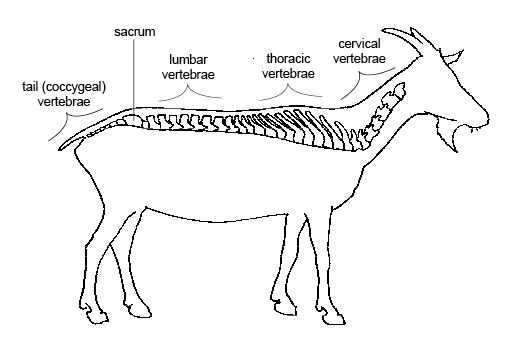
Anatomy and physiology of animals Regions of a vertebral column.jpg


Houses have "feels" to them, just like any well-trafficked space for humans that spans many years. One might even say that these living spaces become permeated with the psychic energy from so many people who lived in them over the years, serving as a beacon for those who come after them, whether or not we know the history of these places. Such was the case with me, certainly; I noticed the beautiful Queen Anne here in town every time I walked past it, on the long walk from my mother's apartment to the local library, in country miles and any type of weather, because such is the measure of my devotion to you, my loving audience. It's what I trained for.

But, that didn't make it any easier. If I was sick—like I was my first year back in Rockland, lying on a thin pull-out chair that served as my bed on the cold floor of my mother's spare second room that she denies as such, to obscure the real reason for exclusions, which is her psychotic temperament—I still had only me to pull through anything, any time of year. So, when I found out that a really large studio was "to let" in the old house on the cheap, guided by the forcefully abusive hands of my mother and father who still gang up on people together when it occasionally serves both of their needs, it wasn't a surprise to me that the space called to me with a variety of energies.

A nice boy I grew up with—who cleaned my rugs for me, continuing the trade that his family established up here many years ago, in a reference and number given to me by my mother to better facilitate the quickness of my move—noted the exact same thing: "Hey, my friend used to live here years ago!" No way! It wasn't a surprise to me. Rockland is that small a place to live. Cool! I showed him a few of the key features that dated the place, like the original flue made in the 1800s by an iron worker from the city. The local librarian who's also a history buff told me an account that backed it up roughly to the letter, though I figured Dutch in there as an early ethnicity.

He said that the old house was designed as a showpiece for a German-American fire insurer from the city who hired fancy artisans that he paid to come up by train, to complete the impressive house. And that matched with what I found in the makers mark imprinted within the iron on the flue. Who knew insurance was such a lucrative business? But then, it occurred to me that structures were very prone to fire years ago, being made of wood and all. Another local told me at the library that her husband was descended from an Italian painter called Niccolini, who made a living painting big fires for just such a purpose, on a hill overlooking the burning structures, to record the event with a supposed deft accuracy. Huh.

His son-in-law, a chiropractor, moved into the big house after his daughter married, another dubious trade that has never won legitimacy from the authentic medical establishment that honors their Hippocratic Oaths solemnly made and upheld, like a lawyer pledging the truth with his clients while swearing on a stack of Bibles. While I have loved the house before I moved in, as a passer-by who can appreciate the finer details of historical architectural constructions, like the decorative wooden cut-outs that look like the spines of a backbone from certain angles that buttress the beautiful old house, the apartment around the bend of the big porch attracted something much less savory.

My neighbor told me the police had to batter down the front door during a violent domestic dispute he finally called the police on, and that was before the sick woman who left feet first this past year in a body bag, because after years of public drunkenness and drug use, she finally succeeded in committing the suicide that she'd loudly proclaim to anyone who'd listen. It was quite different from my side of the house, but similar to my neighbor's predicament with the previous couple years prior: we'd both reached out to prevent harm from happening to other people, and we were both still here, like the backbone carved out of wood by an artist far better than the man who hired him to do such crafty work. Such is the power of a much mightier spirit.


Friday, July 8, 2016

Po'dunk Mountain Town


South Park.png

Because my parents were desperate to be seen as upwardly mobile—or "uppah middel clah-yass", in my mutha's particular accent—we moved around a lot during the first few years of my life. First, we lived in the projects of Queens, then Co-Op City in the Bronx, before my dad took a job with a family of crooks in a very small town in Pennsylvania that only lasted a year, before we finally settled down in Rockland County. The drama caused by so many moves was epic, and like any two real "drama queens", my parents played their new roles as stressed-out "Noo Yawk" parents to the hilt.

My mom caught a terrible cold that happily turned out to be a spot on her lung from a serious case of "Walking Pneumonia" (ooo, that sounds bad!), which cinched the deal for us moving right after my dad quit his job, pocketed by the money he got from shaking down the crooks he worked for, armed with my mom's bad health stories that served as convenient excuses for life's little problems. It wasn't exactly like becoming a superhero, but for my street-savvy parents, it could be worked into being told that way very easily to their hometown crowd, which is exactly what they did. "They'll get theirs, someday", said with a careless shrug of the shoulders, as my mom wrapped her precious antique glassware in newspaper and tissue, because, really, that was way more important than turning state's evidence against fraudulent thieves, in her mind. They got what they wanted. They also took whatever they wanted, like any city person on the make. 

They took almost all of the house's original antique bronze fixtures, which they promptly packed away and never used again. I know, because I moved them around a few years back during my own horrible move from Brooklyn to here, which meant I worked to clean my mom's basement space for weeks, with her sitting there looking at everything, like any episode of the popular t.v. show "Hoarders". She'd packed up all of her stuff from the house in New City into big boxes ("Your grandfather was sick!") never to even look at them again, until the day I picked them up and moved them around, with her youngest sister's pile sitting near-by in the dank gloomy space that was crammed full, also similarly abandoned in the wake of my grandmother's death, because my aunt said she "needed room" in their apartment, which is crazy code for "hoard during times of great stress", for those of you still new to the language of the insane.

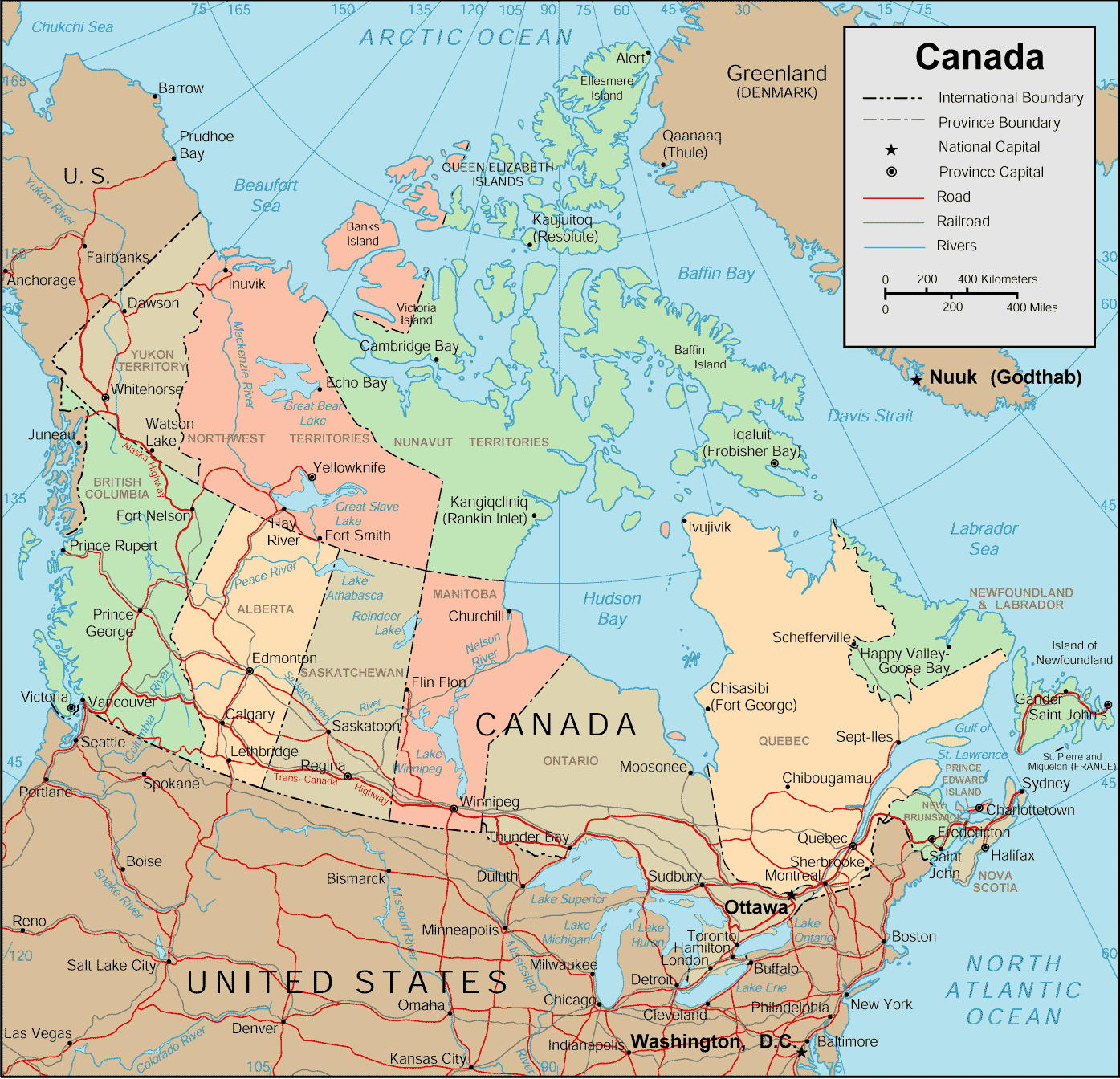
Nonetheless, I picked up a feel for the mountains of the Northeast that I still have. It helped prep me for the winters of upstate New York during college, which is "Canada cold", and for those of you who don't know how or why that is so cold, here's a handy map for you to see its relative position, as it is situated to the state of New York: http://www.canada-maps.org/canada-map.gif. It also meant that my parents almost immediately caved in to the weather, in dramatic outbursts designed to widely telegraph their ineptitude among the mountain folk of Coudersport, Pennsylvania (http://www.bestplaces.net/images/city/coudersport_pa.gif), just in case they wondered whether or not any of the stereotypes about city slickers were true, and they are.

We were smarter, faster, and funnier than the other kids, which got us immediate promotions in grade school, though I was still in pre-K nursery programs and reading classes before I attended Kindergarten, because I wanted to go to school to learn. I already knew how to read, anyway, which was the basis of my soundly reasoned arguments to my crazy-ass city parents stuck in the deep snow of the rural Pennsylvanian mountains (https://en.wikipedia.org/wiki/Coudersport,_Pennsylvania). But, we loved it. We could walk around unmolested by strangers, and our neighbor's daughter Jamie (Hello to "The Peppers"!) was our babysitter, and she was a really nice girl (still is!). We could pile the autumn leaves as high as we wanted without anyone hassling us like they did in the city, and then jump into it as many times as we were willing to rake it back into a pile.


We walked around with our cute little snow doggie "Snowflake", feeling like we belonged there, because we did. The small towns of upstate New York are a lot like the classic main streets of other Northern towns throughout New England, each one as quaint and charming as the next. I actually met a girl from Coudersport at Oneonta State, a blond girl who looked Dutch/German; pretty but thick, which means farm life. We were both taking "Black and White Photography", which meant a lot of time in the darkroom to chat. We laughed about how the cold of Pennsylvania was almost the same as New York, and we were glad for the prepping. A lot of kids from downstate and other places couldn't handle it, my own parents included. 

It's a cold so strong, it almost burns you like nitrogen. You just have to have the DNA for it, and I found that I did. It was similarly baffling to the Coloradans I met during my travels, who were mostly ignorant about the rest of America, like rural people in the middle of America typically are. I explained to them that I spent a year in the mountains of Pennsylvania, backed by my time in the mountains of New York, but it just didn't take. A girl I knew from high school worked at the same paper as me, and she was busy doing "schtick" for the blond crowd gathered around her, in a cheap "Seinfeld" imitation that she thought would give her safe passage through the hinterlands of America, an act she honed on the road after leaving Rockland County for Germany with her German-born parents, even changing her name to "Inga" from the plainer "Ingrid" we knew her as, like she was an exotic Swedish ski instructor instead of some loudmouth brunette from the desperate housewife town of a mostly Jewish New City in suburban New York.

Her bad act caused a lot of problems at work. "But, Marie doesn't act/talk/sound like that, 'Inga' and she's from the same area as you!", said with the same pseudo-quizzical tilt of the head, because those kids were full of shit, too. Acting awards all-around. Soon enough, they got it. I didn't use the backwoods as a "work-out" like some insane tourist from SoCal. No, they saw my version of a big blond in my Scotch boyfriend, and that lad don't feel the cold for nothing, with or without the kilt, kids. Ditto, bro. I got my own clan plaid, too: http://www.novastory.ca/cdm/singleitem/collection/digphotos/id/1368/rec/1. Oh, and I saw online that it'll top out at a "high" of 72° F in  Halifax this week! Brrr...stay cool, babies;) Mama's coming home, soon.


Congratulations, Natalie! "Mummy" loves you, too: http://thechronicleherald.ca/novascotia/1348725-doucette-becomes-first-first-nations-child-welfare-specialist-in-nova-scotia

Thursday, July 7, 2016

By Any Other Name


Arms of the House of de Burgh.svg


You probably know by now that the American immigrant experience isn't some "la-di-da" fantasy concocted solely by rich Hollywood filmmakers and gay Broadway producers. The streets weren't paved with gold when my ancestors arrived here (nor are they now) because they built this city, and dozens of others like it, too. If it was paved at all back then, it was put down in the sizzling heat that is New York's hot summer sun, made with durable Rockland County gravel (hence the name: https://en.wikipedia.org/wiki/Rockland_County,_New_York), padded with the well-trodden horse-shit from so many carriages, that fragrantly emanated from between the big paving stones in the heat.

My grandfather told me stories about "The El" (https://en.wikipedia.org/wiki/IRT_Third_Avenue_Line & (https://en.wikipedia.org/wiki/IRT_Sixth_Avenue_Line), a newly-elevated carriage service that rode high above the stink of the messy cobblestone streets that was turn-of-the-century New York City, in a pleasant riding experience that had velvet ropes for them to hang onto, while standing between the fancy crushed-velvet seats. Quite an experience for a native-born Brooklyn boy like my grandfather to have as a child, used as he was to the small family farms that still lined Brooklyn's streets back then, with double-wide avenues functioning as one big farm route that was conducive to trade between rural crop-producing Long Island and the borough of Manhattan: http://www.bklynlibrary.org/brooklyncollection/historic-brooklyn-photographs.

As great and hard as our real life experiences could be in this land of our birth, it was not always so for many other poor immigrant families, burdened as they were by a lack of education and native know-how. My ex's family was like that. Even though he had the privilege of his mother's ancient Indian lines—for precious government money, land rights, and serious tuition breaks—his father's Polish family fared less well in upstate New York, when it came to free handouts earned from the backs of our joint ancestral labors. It made them twitchy and greedy when it came to earning off of us as a people, competing in the wild marketplace that freedom brings. It makes people nervous about surviving here, you know? Winter's always coming.

Besides immigrant dreams that turned out not to be true, they also wrongly believed that the death-defying boat ride to New York during wintertime was bad, starving as they were then, with a few hastily-shoved potatoes in their dirty pockets, in between sudden squalls at sea and pulls off a bottle of homemade vodka. Uh uh, homies. It gets so much worse. Like, much much worse. My friend Linda's family were Muslims from Russia and Poland who had their name changed immediately upon arrival to Ellis Island, for the comfort of the paper-processing government workers who were basically illiterate. She knew that because her grandmother told her her own emigre story, and she told it to me, not that Linda was always truthful with me. Some families are just tricky like that, you know?

Her white Muslim grandmother married a Mongolian man before they emigrated further east, becoming "Janowski" for ease of travel through Poland and Russia, which was then changed once again to "Janow" here in America—to ease their arrival experience—and that's what my friend Dave's dad did, too, though he told it to me in the tone of a perpetually aggrieved, long-suffering people. "We had to change it, just to get work in 'the unions'. All the unions were run by the Irish back then!", he would explain to us over a dinner of kielbasa and German baked potatoes au gratin with bacon and cheddar melted on top (bless you, Ginger: you know upstate winters, mama!). And that's exactly what his grandfather, his father, and then, he did: they went from being proud, big, strong, Polish-American  "Budzanowski" Catholic boys (http://www.thetreemaker.com/family-coat-b/budzanowski/poland.html), to pseudo Irish-Americans, in a state that has one of the biggest Irish immigrant populations outside of "Eire": http://www.forbes.com/sites/trulia/2013/03/15/americas-most-irish-towns/#59703e0a495e.

Anyway, it was a common enough story among Americans in this vast wilderness that can be the American experience. Anything can happen, at any time. Birth certificates could be falsely-made, and then just as easily lost. Names were quickly taken up and easily discarded, for a variety of reasons: for work, to escape notice as a convict on the run, or to hide the "blackness" behind the real origins of your "low" birth, like a poor native girl who just took on the faith of her loving husband, as Catholics assume during the Rite of Confirmation. 

I willingly chose to take on my grandmother's American name "Ann" in the French spelling (she was baptized "Angelina") to also honor St. Anne (https://en.wikipedia.org/wiki/Saint_Anne), my patron saint of Confirmation, so as to commemorate that time period forever through divine ordination onto my name, which officially makes my name "Marie Louise Anne Doucette". I pronounced it in French for an older friend of mine here at the local library, which was totally impenetrable to him, and then I said it again in perfectly unaccented English, because it can be that dissimilar with a change in pronunciation. 

I know how tricky names can be, as well as the risks involved with naming. It can (or could) mean life or death for some of us, still. It couldn't have been easy for my former in-laws to "pass" as Irish-born back then, but I did understand the economic and cultural pressures his family felt, to conform and survive as "strangers in a strange land". Luckily, he found his squaw in high school, and it isn't like Polish/Russian-born people are exactly "new" to the deep cold of a Northern climate, just our like indigenous people. We need(ed) the change of seasons to remain healthy, because our climate does a lot of good things to our bodies, for the continued health of our tribe. 

Anyway, we found each other through the ensuing centuries of assimilation and madness, because New Yorkers know their own. 
I found—in a very small isolated town buried deep in the rough, dense, wild mountains of New York—an Indo-European American Indian kinda like me. You can't mess with a destiny like ours, love, because we have a "forever" kind of thing goin' on. Trust on that, peeps. We are forever wild. For you. Come find us! We want you in it with us, for real. Be in it, with us.


Wednesday, July 6, 2016

Contents Under Pressure


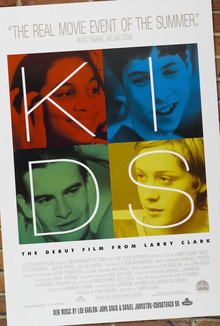
Kids film.jpg


Unlike the addicts and "headcases" lurking around us, me and my working class friends always knew we smoked, drank, and experimented to escape the daily hell(s) we came from. We always knew that if/when we ran things, it would be better, and now it is. But, that didn't help us out much as kids, except in the same dully repetitive way, which was the point behind our terrible homes: we had to do what our insane parents wanted us to, or needed and/or forced us to do, or we'd become homeless children susceptible to crazy-ass hookers and the drugged-out zombies on crack serving them up as their pimps on the then-wild streets of 70s-80s New York City.

We'd see the bombed-out buildings and wandering packs of wild dogs lope through our old neighborhoods like hounds escaped from hell (https://en.wikipedia.org/wiki/Wolfen_(film), and wherever we went, there'd be art in our wake to tell our "peeps" about the bad news, too, though in a really fun and entertaining way. That's how you have to do it with the insane, or they could "snap out" on you, in a suddenly violent way. We'd been at the bad end of a father's fist or a mother's belt borrowed from him, and what they couldn't beat out of us, they starved us into doing, by withholding money and time and parenting.

My grandparents were "hip" to the whole scene; they'd also been forced onto our mean city streets before they were ready, by sick households that just gave up, to have family that then joined together to force them out of school (where they belonged) into rotten jobs that were humiliating and demeaning to the brilliant kids with potential that they were, and remained for the rest of their lives. Their mad families made their prowess—in comparison to their ineptitude(s)—their punishment for "out-living" them. I asked them about it, in between abusive bouts in our sick households, as I leaned in over summertime glasses of excellently-made iced tea or fresh lemonade, drinking in their good health like the succulent blend they had made it for; just for me and my ears alone.

My grandmother wanted to be a nurse or a teacher, and so in response to the brutal pushing of her parents, older brothers, and older sisters (who lived in their own fantasy worlds of delusional thinking and absenteeism), our Great Lord gave them, in His Infinite Wisdom, me to teach, and I drank it in like I was ready for it. I needed it, their succoring. Lord knows I was hungry for it, banished and isolated as I was in a home full of untreated sick people that they also knew all too well from their own lives and upbringings. Well, what did you do after your brother pretended he was "trying out" for the Yankees (cough<bullshit>cough), by wasting his time playing stick-ball in the streets? I asked her, and she told me the truth. Oh, she told me, I won the decision-making process in my household, by becoming a factory manager by the time I was 19 or 20-years old. 

Yeah! That cheered me up. And she did. Through her superior ability to earn, she ruled the roost, which pulled her out of an abusive relationship that was to be her arranged marriage with a boy back from "The Old Country" in the Abruzzi region of Bari, most likely a cousin too closely related for a good healthy match anyway. He put his hands on her, and she fought back by standing up to him, which earned her her father's approval and respect. In the meantime, she met and fell in love with my French Swiss/Irish-American grandfather while canoeing, because they both loved the beach and the outdoors. Ha! Of course, you do. Me, too! But, like, why did they do what they did to you?

"Oh, I don't know..." She'd trail off, in recollection. "After refrigeration put him out of the ice business, he just stopped working." Huh? I never heard of such a thing in my extremely strict household, where child labor was considered a natural right by my sick parents, just like theirs. Why? "I don't know!" she responded to me. "I think they were scared and tired of trying to 'make it' in America. They just refused to learn English." Ah...Yeah, I knew that one, too. Just give up and cave into it. "And my brothers were favored for being older by Italians, so they got away with doing nothing all day." Ha! Yeah! Right! I have that, too! She nodded, and then continued talking to me in private, where no one else could hear her but me, and maybe my silent grandfather.

"Yes, but you have to understand something, Marie..." My ears perked up like the puppy I was, in the presence of greatness, because even I knew from my earliest years that my grandmother ran shit like the strong-armed, Bronx-born female she was. "The work that they refused to do made me much stronger than them." Uh huh. Preach it. Better than school on a Sunday. "After I took the economic lead in my household, I had 'the say' then. Not my parents. Sure, my father loved me and stood up to the neighborhood after my fiancee 'put his hands' on me, but I also had to wait almost four years before I could marry your grandfather, because they were prejudiced against Irish people", and here she made the drink symbol with her hand to her mouth, like you're tippin' back all the way in one big swallow from yo' glass.

Yeah, word. I got that. It meant I'd have to wait for what might be a very long time, even after I succeeded from all my hard work, to get what I wanted, maybe much longer than necessary, because it would take that much time for my family to catch up to my reality in any time, either the past, present, and/or future. And after that, we'd pause in our short conversations that were blessedly free from the static of the mentally ill around us—either swirling about in tense motion, or sitting around us in fretful waiting—in these short exchanges that were like breathing in fresh air after working underground all day in the explosive sewers of the city, like my grandfather did for most of his life (https://en.wikipedia.org/wiki/Consolidated_Edison). 

They'd take a long steadying pull from their cool sodas or glasses of beer, as I followed along with my baby soda or lemonade. It became a ritual that me, my friends, and our classmates would re-enact at about the same time, wherever we were, that'd bring us together in an almost magical synergy we knew it was; a deeply spiritual destiny that we were fated to meet, like the aligning of the planets under a thick blanket of stars in the crisp clear air of upstate New York, protected as we were in our hard-to-reach mountain stronghold of Oneonta, re-creating sacred rituals of renewal and refreshment as young teenage "parents" who'd been made to run things way before our time(s): "It's 'smoke 'em if you got 'em' time!" 

And then we would. We'd pull out cigarettes to take long drags from, in a steadying way that meant the next fight was near, followed by a long drink from an ice-cold beer that'd been cooled from the snow we'd just reach outside our dorm rooms or old houses to grab for our coolers. It wasn't alcoholism, or addiction, or the "touchy-feely" language of some fake pseudo-science made just  for t.v., like the bad pop psychology that's become the business of rehabilitation, rather than the cure. We wanted more for them and for you; now, then, and always. We want(ed) a cure; not for us, but for you. All of you. You get me? Yeah, I bet you do. Now you do. From me, you do.


Tuesday, July 5, 2016

Bordello


https://en.wikipedia.org/wiki/Brothel


Back in the day, me and my large British/Scottish boyfriend lived in a quaint "mixed-use"* residential neighborhood in Denver that had a supposedly thriving bordello operating out of the old house next to our small apartment building, pictured here: https://www.google.com/maps/@39.7423312,-104.9634647,3a,75y,273.09h,90t/data=!3m6!1e1!3m4!1srZ3cLJcEAi2acpMNLcmhpQ!2e0!7i13312!8i6656. Our apartment is the one now decorated with Tibetan prayers flags on the balcony, a true hippie symbol for the mountain adventures of the rich and white "out west" that cleverly masks their true intents of pot smoking and low-level employment behind a handy pseudo-spiritual symbol borrowed from another culture, "slacker"** staples both. 

Of course, the house faced the other side of the building from our apartment, the side with the rowdy gay boys who kept to a more nighttime schedule than ours, but suffice to say, a genuine "shock factor" was in effect. It was then (and now) a beautiful old house better suited to the upscale remodeling of a rich gay architect and his journalist partner, which I'm happy to see has now happened. Denver has always had stunning old houses and plenty of parks, but just like New York City, that doesn't mean crime isn't happening practically beneath your feet. Kent and I were the more "regular" duo of the square Mod-style building we lived in. "There are three 'gay boys' living there, and they're all named 'Rick'! Even the two boyfriends! Ha!"

It was funny, but true. We were the only straight couple in a building full of gay men, but because of our different lifestyles, we barely saw one another, and there was no common laundry room to meet in. "Downstairs Rick" was a nice, quiet, blond man, devoted to his mother (I know), and his cute little lapdog that was very well-groomed (I KNOW!). He was home all day on disability benefits and his father's inheritance, and the upstairs couple was way rowdier than us. Kent could hear them arguing late at night and knocking stuff around, but not me. I'd been diagnosed with deafness by then, which made for easy nighttime sleeping, though not for my hearing partner.

He had the early morning run to do with our Mal, Ted, which meant that he was up by 5 a.m. every weekday morning, with me waking up at 7:00-7:30 a.m. for my downtown newspaper job that I either walked to, or, if it was a nice day, rode our purple motor scooter to, so I could walk TeddyBear for lunch. But, that was our particular schedule. Just like the projects down the block with the liquor store right across the street, stuff changed when we weren't around or awake to see it, which meant that the gay boys living on the other side of the building and the man home all day knew way more "dirt" about nefarious goings in the neighborhood than we did. We were either: 1) asleep 2) walking Teddy or 3) away. And that was it.

After a few late night scuffles that had Kent concerned, he asked the guys upstairs about all the banging and knocking he heard going on late at night, and he was the kind of dude who got answers. "What're you doing up there at night anyway? Making furniture?!" It was an old joke that he turned into his version of what he called "a polite chat", which meant that he got what he was looking for in a conversation as a strong man, or he'd pick you up and throw you across the room. It wasn't subtle, but as a master electrician, it was sometimes necessary with the under-educated people he worked with. As it turns out, "the boys upstairs" were the perfect working-class gay cliche, because that's exactly what he said he was doing: finishing up some chairs he made for a gallery show downtown. Well, that's certainly "arty" enough for this area!

I'd met Kent at a recording studio, as the art director who helped his band make a CD, and we'd become friends through my ex, who frequented a punk rock bar in town called "The Lair" (https://www.google.com/maps/uv?hl=en&pb=!1s0x876c7eca9ed79609:0xb8f14596ec324d8b!2m5!2m2!1i80!2i80!3m1!2i100!3m1!7e115!4shttps://picasaweb.google.com/lh/sredir?uname%3D105306774870304916929%26id%3D6295751615571815730%26target%3DPHOTO!5sThe+Lion%27s+Lair+2925+E+Colfax+Ave,+Denver,+CO+80206+-+Google+Search&imagekey=!1e3!2s-bzMva3lPO5o/V18AvPA_7TI/AAAAAAAAL80/pMIezmcZDXwhtQmZU4j_08JFtL8kNim7wCLIB&sa=X&ved=0ahUKEwjf_5nm4tzNAhWDXD4KHRbaAJIQoioIbzAK), that played his kind of music. We lived a creative life without any of the pretentious bullshit, which is exactly the kind of scene our art, design, and music defined for us, as a generation, and it was always working class in tone, which means that poseurs stay far away from us, because art isn't fun if you don't really know how to do it. And we did.

Suffice to say, with our attentions pulled away, it was a bit of a shock to Kent when he came home from work around 3 p.m. to find a full-on cop car scene right next to our building. What the...? The two gay guys from upstairs were already on sight to gossip about it, and Kent caught them at the right time, but not before he made an entrance to our apartment worthy of the full-on rock star role he played between full-time gigs. "Marie! Marie!" At that point, I was working at home during the day, after the two newspapers in Denver bankrupted each other through a poorly-planned competition that was bailed out by the feds (https://en.wikipedia.org/wiki/Newspaper_Preservation_Act_of_1970), and I was illustrating in our bedroom (on my old studio desk) a children's book I'd written as a child that my mother sent to me. "What?" Me and Ted were alarmed. We had a slow life.

And then he just said it. "Hooker stuff is happening!!" What? Like, I couldn't even understand the words at first, because Denver was such a mild place to live for me. Nothing actually happened there, and whenever I walked around, it seemed like it was a dead place empty of people and life, because I didn't actually see people walking around like you normally would in a small-sized city, even at the park during the daytime. It was such an odd feeling, like downtown Providence was completely desolate at night, in contrast to the working days of the week. This felt like that, too. "What?" 

"Yeah, yeah! The cops busted some 'crack ho's' living next door!" Huh? I just didn't get it. Where? In that nice old house? We never saw actual people walking around this block, let alone next door. Heck, son. Let's go take a look! He filled me in on some of the details he'd already gleaned from the gay guys, but it was jarring to see it in broad daylight. We stood on the sidewalk, watching the scene. A cop car was pulled up on the lawn to the front door, which meant it was a surprise bust. Kent went over to an officer, and quickly came back across the lawn to talk to me, because I had a very concerned look on my face. 

People may talk about New York in an openly disparaging way, but I'd never seen or heard of such a thing happening in or near the excellent spots I picked, when I did real estate as part of a couple. This building was Kent's bachelor pad originally. Still, we never had any idea that such a thing was happening. Not one clue. "They're almost done. They're leaving soon." And that was it. We went upstairs for Kent to tell me the rest of the story, as told to him by the gay couple. "They told me they'd been hearing stuff 'pop off' over there for weeks now." Oh, I see. "Yeah. Like, really loud parties, with some girl fighting some guy on the front law." Ah! That must've been the pimp and his hooker, hence the call to the cops.

And that's exactly what is was. The guys had had enough disturbances from the house next door that finally led them to call the "po po", which is antithetical in "hipster", but they finally did it. "They couldn't sleep at night anymore, and you know how much those guys drink!" Yeah, I did. They were sullen and dark-faced to me, the few times I met them in the hallway, never really speaking to me, but for a dull nodding that was directed more to Kent and his general direction, like whipped puppies avoiding their master. What with the union rip-off job at the newspaper, 9/11, and now hookers, it was time for me to go home. I knew it. I could feel it in my bones. I'd had enough.


*   https://en.wikipedia.org/wiki/Mixed-use_development
** https://en.wikipedia.org/wiki/Slacker