Showing posts with label economic deprivation. Show all posts

Friday, April 22, 2016

More


3 years, 10 months, and 19 days... That's what a woman buried on Mount Moor had lovingly carved into the tombstone for her child. "That's a mama who loved her baby", I said to my brother in passing. We read off their names, dates, and military service as we walked around the small grounds, hemmed in on every side by a new mall and its parking lots, in an area of Rockland County that was swampland when we were growing up here. There was actually nothing to see on the road from Nanuet to Nyack, but for this hidden little gem of a cemetery tucked into boggy marshland nobody else wanted, as fitting a historical tribute to segregation for ethnic minorities as ever.

Acadians, Cajuns, and Creoles shared the same fate, too. Bayou water is considered "bad" water, because mosquitoes give sickness to the people forced to live there. What the new laws couldn't wipe off the face of the earth, nature certainly could. It was an economical way to get rid of a despised people (often better than the European colonists around them who couldn't acclimate to this new place, similar as it is in climate to Europe, but that wasn't the real problem) through deliberate marginalization and severe economic poverty, except for one powerfully overlooked fact, and that was this: already-oppressed minorities often bond with similarly afflicted tribes, and so we did.

What was once a power play among the socio-economic elite, based on their weirdly outdated prejudices against "interbreeding", allowed our ancestors the relative freedom of marrying whoever they choose, which often meant mating with the much greater genetic stability present in the indigenous people who walked their way here, carrying their culture and robust good health with them. And so, it backfired against the minority elite horribly, which only angered the white man even more. We saw name after name of a people who lived over 80 years and more, way before modern medicine was available to them.

Unfortunately, their children didn't fare better. We saw a lot of markers and smaller headstones with one date etched simply into the stone, as places to memorialize their still-born babies before a naming ceremony could take place. I'd passed by the small cemetery many times, always rushing to make an errand on someone else's time, but this time, my brother went along with whatever I wanted. I priced out a few items in the bloated mall that are completely overpriced for this land and its economy, and we both left empty-handed, to visit my grandparents at their resting place. It only seemed fitting.

We were baffled by the overly ornate constructions of chain restaurants that we know are no good, wondering aloud how any amount of business could sustain such an obvious waste of space. Most of the square footage was blown on bad plastic decorations serving one purpose: to attract the eye of someone who'd obviously never been to a mall before, which is totally out-of-date for the area. I can't imagine that this "new" mall will up stay for very long, and that's a comfort to me, too. Long after these stores (with their cheap shoddy merchandise) will be plowed underground, our ancestors will still reside in relative peace, nestled in a little hillside that overlooks the real Palisades of Rockland, with their beautifully rocky facades. Happy Earth Day, 2016.


Tuesday, December 15, 2015

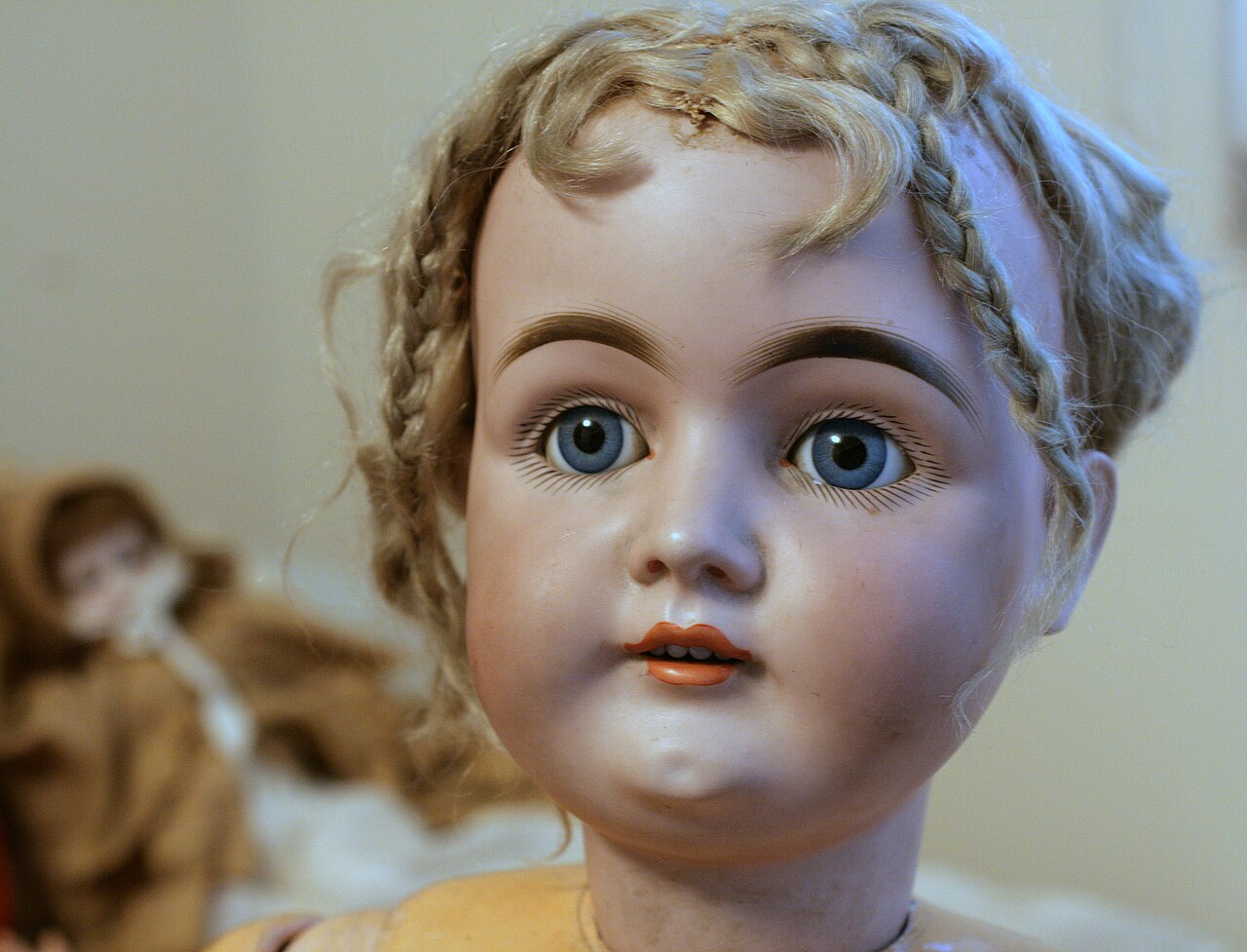
The Doll's Wig


https://en.wikipedia.org/wiki/Bisque_doll

One of my parent's favorite party tricks is retelling their supposedly impoverished childhoods that never really bore up to reality, and how could it? All of my grandparent's provided for their children excellently (and their children's children) for well beyond their years, every one of them going on to college, with the exception of my dad's sister Marilyn, who became an unwed mother and proud Go-Go dancer. Not exactly stellar, but what did they expect? American assimilation was rough for our poorly educated great-grandparents who were "fresh off the boat", back in the days when it was a truly rough ride indeed. My grandparents coped with an economic depression so profound it's infamous worldwide, with parents who may or may not choose to work again, because they couldn't read, write, or speak English.

It made the mundane and middle-class financial deprivations of my parents seem ridiculous in comparison to them and us, which they are. My parents came off the big economic boom that war always seems to bring to winning societies, without them ever really confronting hunger, starvation, or death, except when they did stupidly reckless things with their lives, which they sometimes still do. They were (are) like children to us, and that's how I treat(ed) their woes: like the children of privilege that I know them to really be, because without my grandparents and me, they'd be dead, something they can admit to when they are feeling satisfied, generous, and well-fed, which is all the time.

And so it came as no surprise to me and my brothers when my parents always lined their pockets plushly to over-filling first, questing to fill needs that are much more psychologically-based than true-to-life, severe as their disabilities can be at times. They pout, throw tantrums, threaten, intimidate, harass; they do everything short of murder, and on some days, I could see them in both of those roles, too. My dad used to tell me brief stories about his "Greaser" adolescence in Brooklyn that ended when his best friend was electrocuted for murder, forcing my grandmother to ship him off to the Navy, like she'd sent her husband to war many years ago.

Next to my father's unmarried mother "living-in-sin" and a missing alcoholic for a dad, my mom must have felt performance pressure keenly. And so she mined her roots for scenes that she could use during their resource-based arguments, like two children fighting over a bag of candy. The unfortunate effect for us caught in the middle was always the same result, though: there was way less available for us, and that's exactly what happened as a result of my mom's poverty stories. She told us that they were so poor, that one year the only thing she got for Christmas was a doll's wig for her old doll, and that was it. She used it to justify her tight pocket for each and every year that we presented our Christmas wish lists.

Of course, she neglected to tell me that it was probably one of the finest wig's money could buy, from a store that my grandmother must have pinched pennies to please her bourgeois daughter with the unreasonably pretentious airs, but that was the price my grandparents paid for a fancy parochial school education. They figured it was worth the price if even one of their disordered kids could get a job after college, and it panned out, like all of my grandparents really good plans do, and just like mine do. After all, I learned from the best. 
Life for us is a world of plenty.